

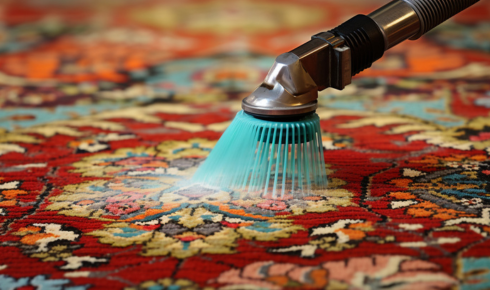
Some are older than the homes they rest in. Others were hand-knotted by artisans who spent months—sometimes years—working wool and silk into patterns that still hold meaning centuries later. And yet, despite their cultural and monetary value, Persian rugs are routinely treated like ordinary carpets.
What Makes a Persian Rug Fundamentally Different?
At a glance, a Persian rug might look like a decorative floor covering. In reality, it’s closer to a textile artwork.
Authentic Persian rugs are traditionally:
- Hand-knotted, not machine-woven
- Made from natural fibres like wool, cotton, or silk
- Dyed using vegetable or mineral pigments, not synthetic dyes
- Constructed with a dense knot structure that traps dirt deep within the pile
Unlike wall-to-wall carpet, which is designed for durability and frequent chemical cleaning, Persian rugs are designed for longevity through gentle, informed care.
That distinction matters more than most people realize.
The Biggest Myth: “A Rug Is a Rug”
One of the most damaging assumptions homeowners make is that cleaning principles are universal.
They’re not.
Standard carpets are built to tolerate:
- High-alkaline detergents
- Hot water extraction
- Mechanical agitation
- Frequent, aggressive cleaning
Persian rugs are not.
Their fibres respond differently to moisture, heat, and chemicals. Wool, for example, contains natural oils that give it resilience and sheen. Strip those oils away, and the rug becomes brittle, flat, and prone to breakage.
Once that happens, no amount of “conditioning” brings it back.
Why Off-the-Shelf Carpet Cleaners Are So Harmful
Most retail carpet shampoos are designed for synthetic fibres like nylon or polypropylene. They’re alkaline by default, because alkalinity breaks down grease quickly.
That’s great for synthetic carpet.
It’s disastrous for natural wool.
When used on a Persian rug, these products can:
- Cause colour bleeding between dyes
- Leave sticky residues that attract more dirt
- Dry out fibres, leading to premature wear
- Disrupt the rug’s internal tension, causing rippling or curling edges
I’ve seen rugs that looked “clean” for a week—then aged ten years in a month.
Water Is Not Always Your Friend
Another common mistake is over-wetting.
Persian rugs are dense. Water doesn’t just pass through them—it gets trapped. If moisture isn’t removed evenly and thoroughly, several things happen:
- The foundation yarns can shrink at different rates
- The rug can develop a permanent wave or buckle
- Trapped moisture encourages mould growth, especially in humid climates
This is why DIY steam cleaning is particularly risky. Heat accelerates dye migration, and uneven suction almost guarantees moisture retention below the surface.
What you don’t see is often where the real damage starts.
The Issue of Colour Migration (And Why It’s Hard to Reverse)
Persian rugs often use multiple dyes within a single pattern. These dyes were never intended to be exposed to strong chemicals or excessive water.
When the wrong cleaning method is used, colours can “walk” into adjacent fibres. Reds bleed into creams. Blues cloud yellows. The pattern loses clarity.
Once dyes migrate, restoring the original design is extremely difficult—and sometimes impossible.
This is why experienced rug specialists always test dye stability before cleaning. It’s a step skipped by generic carpet services, and it’s one of the most costly omissions.
Dirt Is More Dangerous Than You Think
Ironically, avoiding cleaning altogether isn’t the solution either.
Persian rugs act like filters. Dirt and grit settle deep into the pile, where foot traffic grinds it against the fibres. Over time, this causes internal abrasion—the rug wears from the inside out.
The key difference is how that dirt is removed.
Gentle dusting, controlled washing, and proper drying protect the structure of the rug while removing abrasive particles. Aggressive surface cleaning just pushes dirt deeper.
Why Experience Matters More Than Equipment
You can own the most expensive cleaning machine on the market and still destroy a Persian rug if you don’t understand how it was made.
Proper rug care involves:
- Identifying fibre composition
- Understanding dye behaviour
- Adjusting water temperature and pH
- Controlling agitation manually
- Drying the rug evenly and slowly
This is where experienced, specialist cleaning makes the difference. Companies like Happy Clean Dublin approach Persian rugs as individual pieces, not floor coverings—testing, adapting, and treating each rug according to its specific construction rather than using a one-size-fits-all method.
That mindset is what preserves value.
When “Looks Fine” Isn’t Fine at All
One of the hardest things about rug damage is that it often doesn’t show immediately.
Chemical residue can sit dormant for months. Fibre weakening happens gradually. Colour dulling creeps in slowly.
By the time the rug looks obviously damaged, the process is already complete.
That’s why prevention—not repair—is the smartest strategy.
How Often Should a Persian Rug Be Professionally Cleaned?
There’s no universal rule, but as a guideline:
- Light-traffic areas: every 3–5 years
- High-traffic areas or homes with pets: every 1–2 years
More important than frequency is method. A properly cleaned Persian rug can last generations. A poorly cleaned one can be ruined in a single afternoon.
The Bottom Line: Respect the Craft
Persian rugs weren’t made for convenience. They were made to last—if treated with care.
Treating one like a regular carpet ignores centuries of craftsmanship, materials, and tradition. It also ignores reality: these rugs don’t forgive shortcuts.
If you invest in a Persian rug, invest in understanding it—or in professionals who do.
Because once the damage is done, no cleaner, conditioner, or apology can undo it.