A Smarter Way to Manage Home Water Quality Without Overcomplicating It
Most of us don’t think much about water until something changes. The shower starts leaving white marks on the glass, the kitchen tap develops an odd taste, or…
Most of us don’t think much about water until something changes. The shower starts leaving white marks on the glass, the kitchen tap develops an odd taste, or the water heater seems to collect scale faster than it used to. These little annoyances can turn into a bigger concern when you’re unsure what’s causing them or which solution is worth paying for.
The good news is that improving household water doesn’t have to involve a complicated setup or a cupboard full of equipment. It starts with understanding your water, identifying what needs attention, and choosing a practical solution that fits your home. Technology can make the process easier, too, but only when it serves a clear purpose rather than adding another gadget to manage.
Begin With the Basics, Not the Sales Pitch
Water quality varies from one property to another. Some households deal mainly with hard water, which contains elevated levels of calcium and magnesium. Others notice sediment, iron staining, chlorine taste, or concerns about specific contaminants. A clear glass of water doesn’t necessarily reveal everything that’s present, so appearance alone isn’t enough to determine whether treatment is needed.
Take a moment to notice the patterns around your home. Are mineral deposits appearing at several faucets, or is the problem limited to one fixture? Does the water taste different throughout the house? Have you recently had plumbing work done? These observations can help narrow down the possibilities, though they won’t replace appropriate testing.
A water test provides a more dependable starting point. Depending on the water source and local conditions, testing may examine hardness, pH, iron, dissolved solids, bacteria, or other substances. If you’re concerned about a health-related contaminant, use a test designed to detect it, and consider a certified laboratory when appropriate.
Once the results are available, you can compare treatment options based on evidence. This is far more useful than buying a product because its packaging promises cleaner, healthier, or better-tasting water without explaining what it actually reduces.
When Smart Technology Meets Water Treatment
Smart home technology has moved well beyond lighting and thermostats. Connected devices can help homeowners monitor certain household systems, receive alerts, and keep track of maintenance. Water management is becoming part of that conversation, particularly for people who want earlier warnings about leaks or unusual equipment activity.
A system such as DROP Smart Home may appeal to homeowners interested in connected water management. Depending on the specific products and configuration, smart water systems can offer features such as leak monitoring, automatic shutoff, or app-based alerts. The available functions vary, so check the manufacturer’s current specifications rather than assuming every connected device provides the same protection.
The practical benefit is easy to understand. Imagine discovering a slow leak beneath a sink before it damages the cabinet or spreads across the floor. An alert may give you a chance to respond sooner, particularly when nobody is home. Some systems can also help users keep an eye on water usage, making unusual patterns easier to spot.
Still, smart technology has limits. A leak detector does not automatically improve water quality, and a connected shutoff valve isn’t a substitute for appropriate plumbing maintenance. Before investing, consider whether the system works with your existing plumbing, what happens during a power or internet outage, and whether subscriptions or additional components are required.
Treating Water Throughout the House
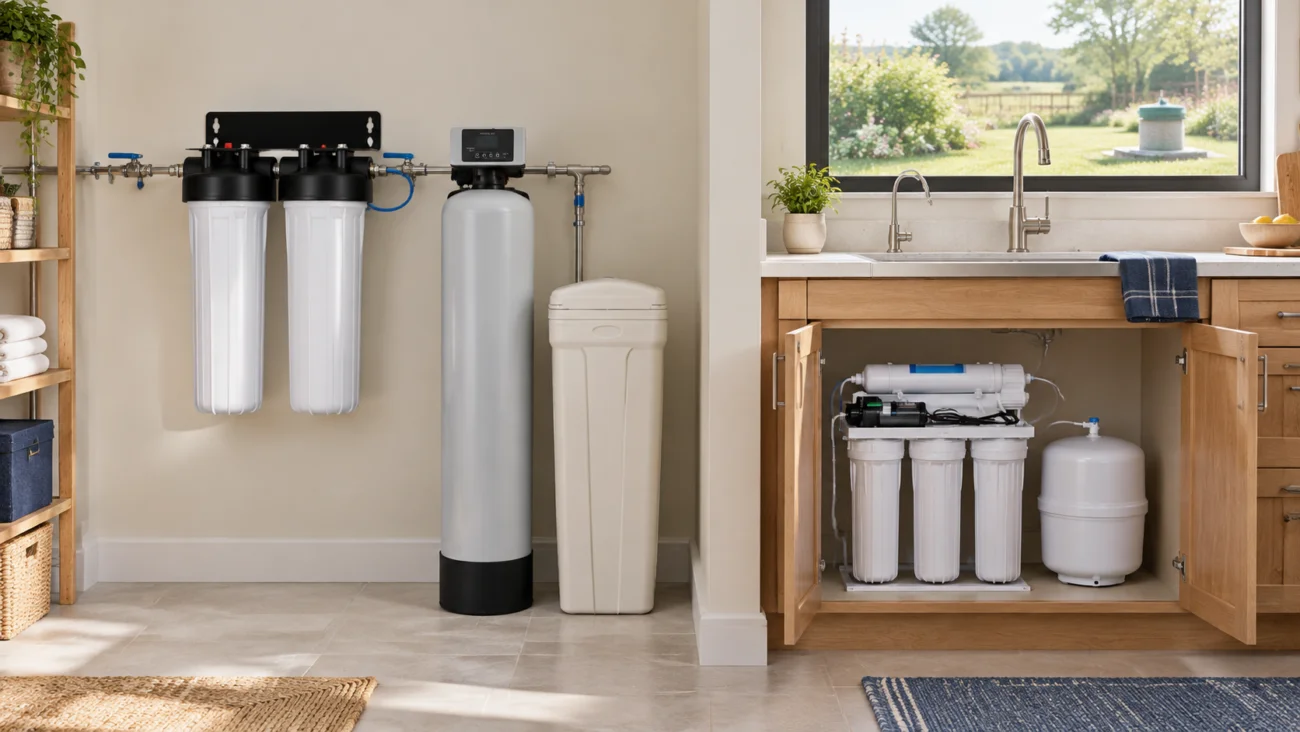
When a water concern affects several fixtures, treating the water as it enters the property may be worth exploring. A point-of-entry setup can supply treated water to showers, laundry appliances, kitchen taps, and other outlets. However, the technology should be selected according to the water test rather than installed simply because a whole-house package is available.
Whole-home filtration can involve different types of media and treatment stages. Sediment filters capture particles such as sand or rust, while activated carbon can reduce certain tastes, odors, and selected compounds. Other technologies address different concerns, and not every filter is designed to reduce dissolved contaminants or microorganisms.
Flow rate is important. A system that works well for a small household may struggle when several showers, a washing machine, and kitchen fixtures are operating at the same time. Ask about capacity, pressure loss, installation requirements, and access for filter replacement before choosing a unit.
It’s also worth considering whether every tap needs the same treatment. If your main concern is drinking-water taste, a point-of-use filter may be enough. If hardness is causing scale throughout the property, a water softener may be more relevant. In some homes, a combination makes sense; in others, it adds unnecessary expense.
Private Wells Need Their Own Plan
Homes that rely on private wells face a different set of responsibilities from those connected to a municipal supply. Well water can be influenced by local geology, nearby land use, septic systems, flooding, and changes in the surrounding environment. Its quality may shift over time, even if it has looked and tasted the same for years.
Effective well water treatment begins with appropriate testing. Depending on the location and potential risks, a homeowner may need to check for bacteria, nitrates, hardness, iron, manganese, or other substances. A local health department or qualified water professional can help identify suitable tests and recommended testing intervals.
The results should guide the treatment method. Sediment filters may help with suspended particles, while specialized systems can address particular minerals or contaminants. Ultraviolet treatment may be appropriate for microbial disinfection when correctly selected and maintained, but it won’t remove every chemical or dissolved substance.
For example, if orange stains keep appearing around the sink, testing for iron may be more useful than purchasing a general-purpose filter. If bacteria are detected, a taste-improving cartridge alone won’t make the water safe. Each problem calls for a solution designed for that specific purpose.
Maintenance Is Where Good Decisions Pay Off
Even a well-chosen treatment system needs attention. Filters gradually reach the end of their useful life, softeners may require salt and regeneration, and reverse osmosis membranes need replacement according to the manufacturer’s schedule. Connected equipment also needs occasional checks to ensure that alerts and controls are working properly.
Keep a simple record of installation dates, filter changes, service visits, and test results. It takes only a few minutes, but it can help you notice recurring problems and plan for replacement parts before they’re urgently needed.
If water pressure changes suddenly, a leak appears, or the taste and color shift unexpectedly, investigate rather than assuming the filter has simply worn out. The cause could be the treatment equipment, household plumbing, or the incoming supply. Retesting may be necessary if water quality is in doubt.
Build a System Around Your Actual Needs
The best home water setup isn’t necessarily the newest or most complicated one. It’s the arrangement that addresses your water concerns, fits your daily routines, and remains affordable to maintain. Smart monitoring can add convenience, while suitable filtration or softening can address specific water characteristics. Testing helps determine which features are genuinely useful.
Take time to compare equipment, read performance claims carefully, and ask questions about installation and long-term costs. When you understand what your water needs, the choices become easier to navigate. A little planning today can mean fewer surprises tomorrow—and a home water system that quietly does its job without demanding constant attention.