Better Water at Home: Choosing the Right Treatment for Everyday Needs
Most of us don’t give much thought to the water coming out of the tap until something changes. Maybe soap no longer lathers properly in the shower, white…
Most of us don’t give much thought to the water coming out of the tap until something changes. Maybe soap no longer lathers properly in the shower, white spots appear on glassware, or the drinking water develops a taste that wasn’t there before. These little annoyances can become part of daily life, but they may also be signs that your home’s water needs a closer look.
The good news is that water quality problems are often manageable once you understand what’s causing them. The challenge is choosing a solution that fits your water supply, household habits, and budget. A system that works beautifully for one home might be unnecessary or ineffective in another. Getting the basics right can save money and make everyday water use a whole lot easier.
Understanding the Water Entering Your Home
Water quality depends partly on where your supply comes from. Municipal water is generally treated and monitored according to applicable regulations, but its mineral content and taste can still vary. Homes using private wells face a different set of considerations because groundwater conditions depend on local geology, nearby land use, and the condition of the well itself.
Even within the same neighborhood, two properties may have noticeably different water. One household might struggle with mineral buildup, while another notices sediment or an unpleasant odor. That’s why assumptions based on a neighbor’s experience aren’t always helpful.
Start by paying attention to what you’re seeing. Chalky deposits around faucets often suggest hard water. Reddish stains may indicate iron, while cloudy water can sometimes be caused by air bubbles or suspended particles. These clues are useful, but they don’t tell the whole story.
Testing is the more reliable way to understand your supply. A qualified laboratory or water treatment professional can help determine which tests make sense for your water source and any concerns you’ve noticed. From there, treatment decisions become much more straightforward.
When Hard Water Becomes a Household Problem
Hard water contains elevated levels of minerals, mainly calcium and magnesium. These minerals aren’t generally considered a health concern at typical concentrations, but they can make household cleaning more difficult and contribute to scale buildup.
You may notice a white crust forming around the kitchen tap or showerhead. Glasses can come out of the dishwasher with cloudy marks, and soap may leave a film on bathroom surfaces. Over time, scale can accumulate in water heaters, pipes, and appliances, depending on the water conditions and equipment.
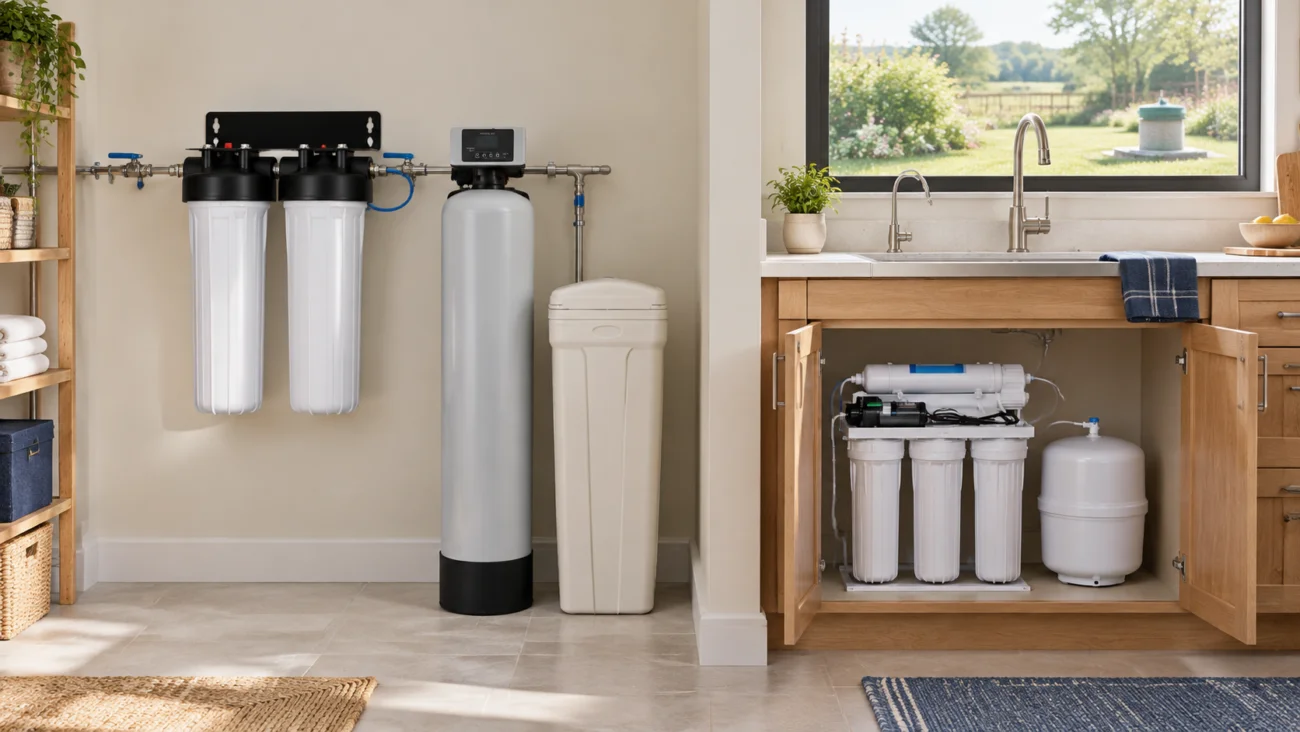
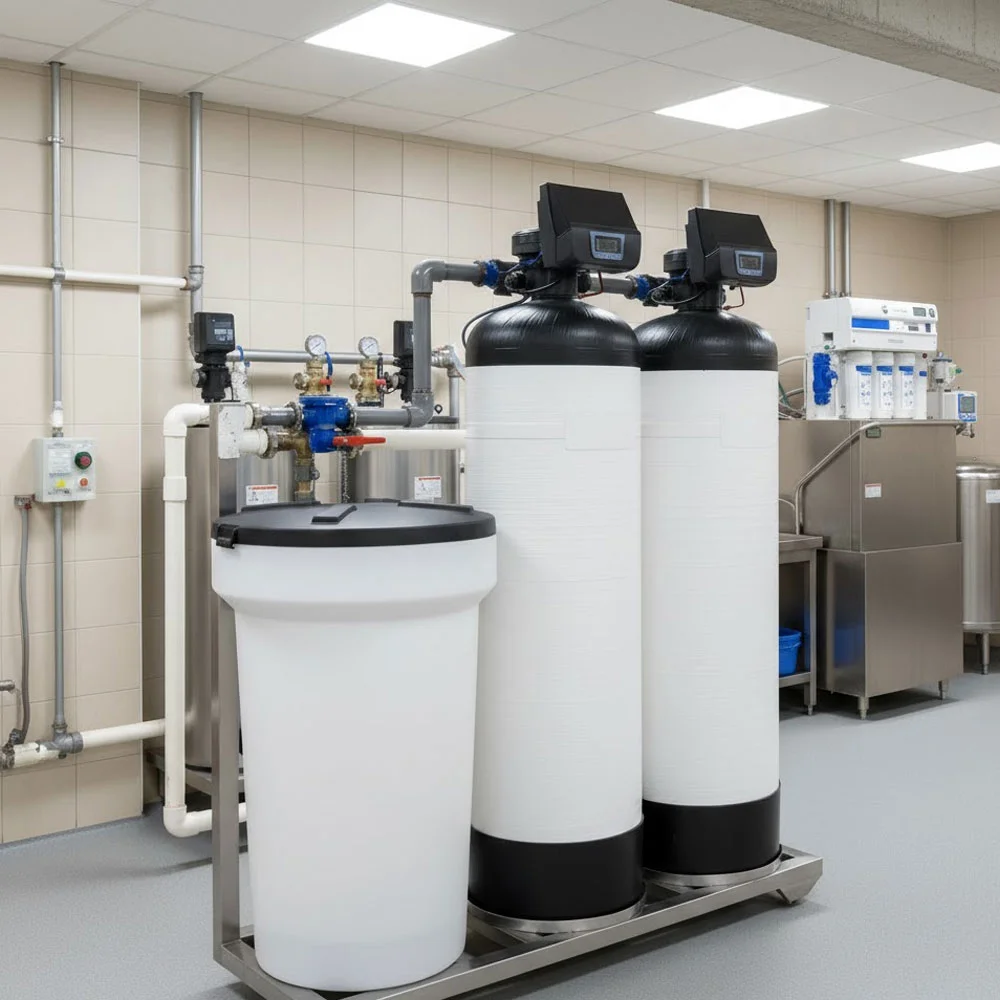
For many households, water softeners offer a practical way to manage hardness. Traditional ion-exchange softeners replace calcium and magnesium ions with sodium or potassium ions, reducing the minerals responsible for scale. This can make cleaning easier and help protect equipment from mineral deposits.
Still, a softener isn’t the answer to every water problem. It doesn’t automatically remove bacteria, nitrates, or all other contaminants. Some people may also need to consider sodium levels in softened water, especially when following medical advice to limit sodium intake. In certain installations, a separate unsoftened drinking-water tap may be worth discussing with a qualified professional.
Before buying a unit, find out how hard your water is, how much water your household uses, and what maintenance the equipment requires. Proper sizing matters. An undersized system may struggle to keep up with demand, while an oversized one could mean paying for capacity you don’t need.
Private Wells Need a Different Kind of Attention
A private well gives homeowners more direct responsibility for their water supply. Unlike a public system, a private well generally isn’t covered by routine municipal monitoring, so the household needs to arrange appropriate testing and maintenance.
The water might look clean and taste perfectly normal while containing substances that aren’t visible. Depending on the area, potential concerns can include bacteria, nitrates, arsenic, iron, manganese, and other naturally occurring or introduced substances.
Effective well water treatment begins with testing rather than selecting equipment based on guesswork. A laboratory can help identify which contaminants are present, while local public health guidance can help determine appropriate testing intervals. Testing is especially important after flooding, repairs, changes in water appearance, or other events that could affect the well.
Treatment methods depend on the findings. Disinfection may be necessary for certain microbial concerns, while specialized filtration or other technologies can address specific chemical or mineral issues. Sediment filters can help with suspended particles, but they won’t necessarily remove dissolved contaminants.
Well maintenance matters, too. Keep the wellhead protected, make sure drainage moves away from the well, and arrange inspections when recommended. If a test identifies a contaminant at a level requiring action, follow the advice of the laboratory or local health authority. An alternative safe water source may be needed until the issue is resolved.
Making Drinking Water Taste and Smell Better
Water can be safe to drink and still have a taste or odor that people dislike. Chlorine, naturally occurring minerals, and other substances may affect the way water tastes. Some households prefer the convenience of treating water at a single kitchen tap rather than installing equipment throughout the property.
A properly selected drinking water filtration system can improve water quality at the point where it’s consumed. Activated carbon filters, for example, can reduce chlorine taste and odor and may address certain other substances, depending on the product. Reverse osmosis systems can reduce a broader range of dissolved substances when designed for the specific application.
The important detail is to check exactly what a filter is certified or independently tested to reduce. Two products that look almost identical can have different performance claims. A general-purpose carbon filter, for instance, shouldn’t be assumed to remove every dissolved metal or microorganism.
Consider your household’s daily habits before choosing a system. A family that fills reusable bottles throughout the day may prefer an under-sink unit with a dedicated faucet. Someone renting an apartment might want a simpler option that doesn’t require permanent plumbing changes, provided it addresses the actual water concern.
Whichever system you choose, replace cartridges according to the manufacturer’s instructions. A neglected filter may lose effectiveness, and some systems can become less hygienic when maintenance is overlooked. Better filtration depends on both the technology and the way it’s used.
Think About Cost Beyond the Purchase Price
Water treatment equipment comes with more than an initial price tag. Installation, replacement filters, electricity, water use, servicing, and eventual component replacement can all affect the total cost.
A cheaper unit isn’t always the most economical choice if its cartridges are expensive or difficult to find. On the other hand, a complex system may offer little extra value if your water only has one straightforward issue.
Ask providers for a clear explanation of operating costs and maintenance requirements. Check whether replacement parts are readily available and whether the system needs professional servicing. If you’re comparing several options, focus on their ability to address your specific water concerns rather than relying on broad promises about cleaner or healthier water.
It’s also sensible to review the results after installation when appropriate. Follow-up testing can help confirm whether a treatment system is performing as expected, particularly when addressing a contaminant with potential health implications.
A Little Knowledge Makes Better Water Possible
Choosing a water treatment system doesn’t have to become a major research project, but it shouldn’t be a blind purchase either. Start with the symptoms, test when necessary, and match the equipment to the problem.
For one household, the right answer may be a softener that reduces stubborn scale. Another may need a well inspection and targeted treatment, while a third simply wants better-tasting water at the kitchen sink.
The most useful approach is the one that fits your home and can be maintained without unnecessary hassle. Once you understand what’s in your water and what you want to improve, the choices become clearer. And that’s a much better place to start than buying equipment and hoping it solves everything.